
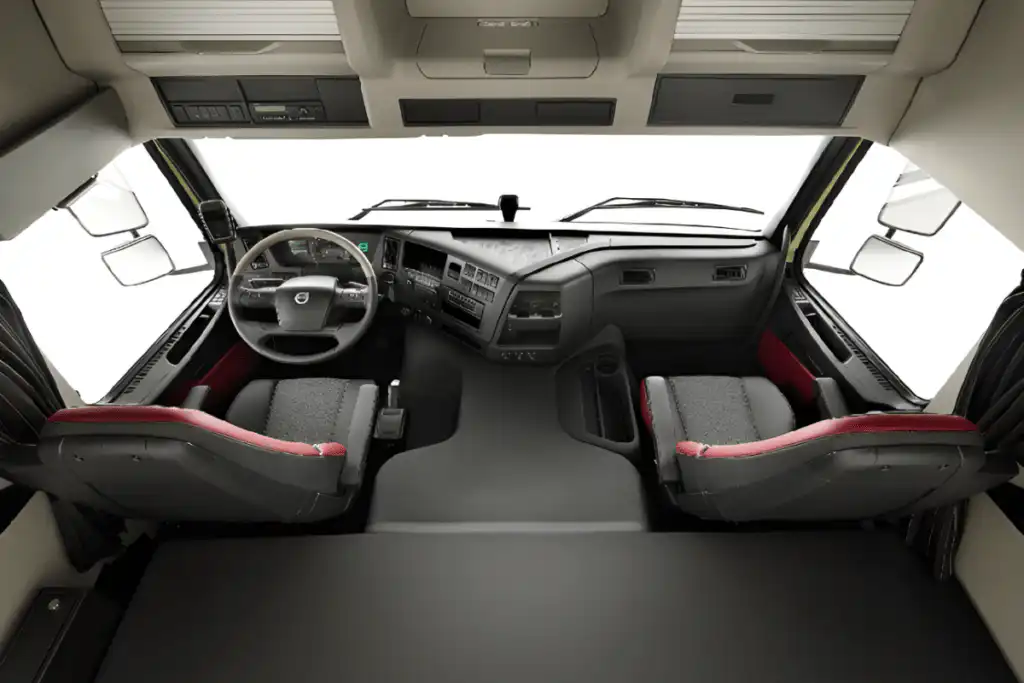
How FleetGO’s in-cab system can play a part in attracting and retaining the best talent.
“Where have all the truck drivers gone?”
According to research by the world transport organisation (IRU), there were more than three million unfilled driver positions globally as of 2023, a number predicted to rise to seven million by 2028.
How did we get here?
Problems began in the UK with Brexit, when a large pool of local drivers returned to continental Europe, but on a global scale it was the 2020 pandemic that brought freight to a halt and put the brakes on new driver testing. If the public was previously unaware of the crisis, fuel supply shortages and the subsequent panic buying on UK forecourts in September 2021 brought the issue firmly into the spotlight.
Top driving talent is retiring
The roots go deeper, however, and if the global fuel distribution sector finds itself facing a driver shortage, it is largely because of an ageing talent pool that is leaving the profession faster than the pipeline can replenish it.
The average age of an HGV driver worldwide is 44, and 30% of drivers plan to retire by 2026. With young drivers often unable to qualify until the age of 21, and with an additional ADR licence required to haul hazardous loads such as fuel and LPG, there is a barrier for young talent where there should be a welcome mat.
At a time when employers need to compete for talent, they are wrestling with a range of challenges:
- Rising fuel costs mean firms have less money to invest in recruitment and training.
- Negative public perceptions around diversity in trucking, as well as driver security concerns, put off women and minorities. Statistics support this. IRU figures show that only 12% of drivers globally are under 25, and in Germany this is as low as 2.6%, while just 6% are women.
- Visa policy changes, for example relating to South African drivers, have reduced the number of qualified drivers with reciprocal licences in the Irish workforce.
- New EU Smart Tacho 2 regulations require companies to install next-generation tachograph technology capable of improving driver work-time monitoring and enabling remote monitoring by the authorities. It is an extra hurdle that may promise long-term benefits to the industry as a whole, but it also represents an immediate cost for individual businesses.
- Retention issues remain significant. Average turnover rates are as high as 90% among long-haul truckers at major US trucking companies. Many drivers cite pay-by-the-mile structures as a source of discontent, since time spent waiting at loading docks leaves them out of pocket.
Surprisingly, this is one hiring impasse where salaries are not directly to blame. In fact, average driver salaries are typically higher than the base cost-of-living level, particularly for LPG and fuel tanker drivers, who are traditionally among the better-paid and most highly skilled drivers in the sector.
The real reasons for driver discontent
The biggest grievances cited by 91% of discontented drivers in a recent IRU survey were the lack of rest areas and poor treatment at delivery sites.
In relation to the latter, drivers regularly refer to a lack of respect at delivery locations, with some major companies specifying a narrow delivery time slot and then turning drivers away if they arrive outside that window.
Where drivers should be valued for the vital contribution they make in keeping the economy fuelled and stocked, many instead feel treated as a burden or inconvenience by the depots they serve.
Recent changes in the EU
With Poland, Germany and other traditional trucking powerhouses all sounding the alarm, the EU deserves credit for responding with measures to lower the age for obtaining the Certificate of Professional Competence (CPC) to 18, as well as enabling better recognition and exchange of driving licences from third countries.
In response to concerns about driver safety, there are also directives in development aimed at creating a higher standard of designated parking areas and prohibiting weekend rest in driver cabins.
At the same time, mandatory ESG reporting as part of EU Green Deal objectives will place an additional burden on fuel distribution operators. The first reports are due in 2026.
How FleetGO can enhance driver satisfaction
No single software solution can resolve all the issues behind the driver shortage, but FleetGO’s many driver-friendly features can improve onboarding, safety, and the day-to-day experience of drivers on the road.
It starts with intuitive in-cab meter tracking and onboard stock management software. These support driver retention by taking much of the drudgery and repetition out of deliveries, freeing drivers to spend more time on the road using a system they can trust.
Big-button technology instead of paper-based frustration
Younger drivers are digital natives. They expect clean, modern interfaces, not clipboards and calculators. FleetGO’s in-cab system, with touchscreen-friendly controls and a user-focused layout, replaces paper-based processes with smart, simple technology. For employers, this offers a valuable recruitment advantage: an operation that feels professional, modern and innovative from day one.
But it is not only for the tech-savvy. Drivers of all ages benefit from a system that reduces manual input, errors and administrative fatigue. With essential delivery data, such as account IDs, payment terms, order volumes and pricing, flowing directly from the ERP to the cab, the focus returns to what drivers do best: making safe and timely deliveries instead of leafing through a stack of paperwork to find the right information.
Streamlined technology also shortens the learning curve. With fewer manual steps to master, new hires can get up to speed quickly with FleetGO’s software, which is crucial in a sector where training delays cost time and money. Digital tools also minimise costly onboarding mistakes and reduce dependency on supervisors, making the first few weeks less stressful and more empowering.
This matters. New drivers who feel supported and capable are more likely to build on their skills rather than leave because of confusion or frustration.
Customers are happier too
Communication at each delivery point is far more likely to be positive when customers are informed, accommodated and heard. The negative reactions that so many drivers complain about often stem from customers who are frustrated by fuel deliveries being out of sync with their business schedule, or by delivery prices and volumes that do not match their expectations. Unfortunately, drivers often bear the brunt of that frustration.
With FleetGO’s real-time vehicle and stock tracking, HQ can keep each depot informed and customers can get the answers they need. Costs are calculated according to the volume delivered, rather than the volume ordered, so transaction data is always accurate.
If delays occur, or there are access restrictions, drivers can instantly send a message to customers to keep them informed. Drivers can also communicate seamlessly with HQ about such delays or issues, including sending photos of damaged pumps or blocked access routes.
Better route sequencing
Delays and bottlenecks are another major frustration for drivers, with knock-on costs for the business as well. With smart delivery sequencing and the ability to reschedule drops while on the move, each truck spends more time on the road, meaning drivers are not left idling by the roadside waiting for their allocated slot. When data is moving, tankers are too.
That can be an even stronger retention factor during the harsh winter delivery season, when conditions are more difficult and delays are more likely. Businesses can assign their best-performing drivers to their busiest routes, easing the pressure on younger and less experienced drivers, who can learn the job without losing their enthusiasm for the lifestyle in the process.
Even when conditions are milder, as they may be in the US or on Southern European routes, better delivery sequencing technology shows that employers take their drivers’ work-life balance seriously. The sooner drivers can complete their routes, the more reliably they can return to their families on time.
Seamless compliance
Even for experienced drivers, roadside checks are stressful. But when a driver has certification, licences, and stock or tachograph data readily available, or can easily link to documentation stored in the office ERP, the truck can be back on the road with minimal delay.
The required data flows freely, the risk of seizure is reduced, and the driver can continue to the next planned delivery.
Occupational health and safety
FleetGO, previously know as DreamTec Systems, provides real-time stock and meter tracking, so any discrepancies between pump readings and tickets are quickly flagged. If an anomaly occurs, two-way messaging enables faster resolution and greater accountability. Overall, this creates less stressful working conditions for drivers who are already managing the responsibility of transporting hazardous loads.
In regions where driver safety is a genuine concern, real-time stock and location tracking are essential. If a truck moves outside its geofenced area, or the duration of an unplanned stop exceeds a certain threshold, alerts can be triggered at HQ and emergency services can be contacted if required.
FleetGO has also recently updated its Dynamic Risk Assessment features, providing an additional layer of security for drivers and deliveries.
Conclusion
Given the time it takes to obtain all the necessary certifications as an LPG tanker driver, and the fact that a wave of qualified drivers is expected to retire from the sector in the coming years, fuel and energy distribution companies should treat talent acquisition as a matter of urgency.
By maximising the value and efficiency of every drop, FleetGO enables businesses to meet rising customer demands and tighter margins, supported by motivated drivers who are easier to attract and retain.
